
Crack Filling
Routed and filled with hot rubberised sealant before sealing.
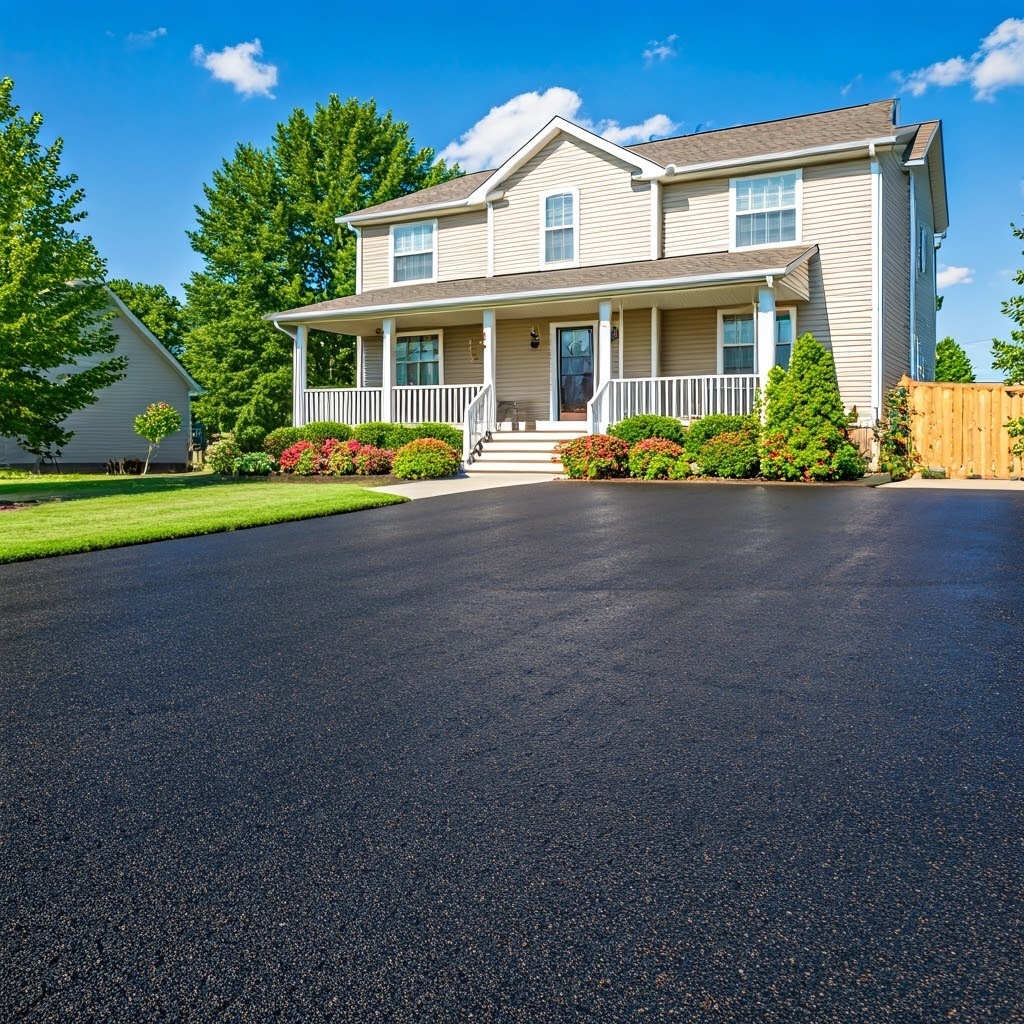
Crack filling and sealcoating on a two-to-three year cycle — the maintenance that decides whether a Doylestown driveway gives you twelve years or twenty-five. Prepared properly, sealed at the right temperature, not thinned to make it go further.
Sealer bonds to clean asphalt and to nothing else. A drive that has not been swept and blown out, whose oil spots have not been primed, and whose cracks are still holding weeds will take a coat that looks excellent in June and is peeling by the following spring.
That gap between how it looks on day one and how it performs in year two is why sealcoating attracts so much door-knocking work in this area every summer. The corners that get cut are all invisible at handover.
Routed and filled with hot rubberised sealant before any sealer goes down. This is the step that actually extends the driveway’s life, because it is what stops water reaching the base. Sealer protects the surface from sun and fuel; crack filling protects the structure. If your budget only stretches to one, buy the crack filling.
We will not seal a driveway paved this year — fresh asphalt needs a full season to cure and release its oils first. We will not seal into a forecast with rain in the next 24 hours or with temperatures dropping. And we will not over-thin the material to stretch it across more square footage, which is the single most common reason a sealcoat fails early.
Routed and filled with hot rubberised sealant before sealing.
Commercial-grade sealer, cut in at the edges rather than sprayed over them.
Contaminated areas treated so the sealer bonds instead of lifting.
Any failures dealt with before sealing, since sealer will not fix them.
Township approaches and shared drives, sealed in one visit.
Badly oxidised surfaces get a second coat rather than a thinner first one.
If the surface has gone grey and porous, it is due. Call (215) 997-1258 for a price.
Every two to three years. Annually is a waste of money and can build a film thick enough to crack and peel of its own accord. Every five or more and the asphalt oxidises between treatments, which defeats the point of sealing at all.
Not yet. Wait at least a full year and through a summer. New asphalt needs to cure and release surface oils, and sealer applied over that will not bond — it can leave a soft, tacky finish that never sets properly. A new drive does not need the protection in its first year anyway.
Be careful. Door-to-door sealcoating is common here every summer and the recurring problems are the same: sealer thinned far past specification so it covers more area, no crack filling or surface preparation, and no way to find the contractor when it peels a year later. Ask what preparation is included, ask about crack filling, and check they can be reached next spring.
No. Sealer is a coating a fraction of a millimetre thick — it cannot bridge a crack of any real width. Cracks are a separate step, filled with hot rubberised sealant before the sealer goes on. Anyone quoting sealcoating as a repair for a cracked drive is describing a cosmetic job.
24 hours before walking on it, 24 to 48 before driving, longer if the weather is cool or humid. Avoid turning your steering wheel while stopped for the first couple of weeks — power steering scuffs fresh sealer easily.
Tell us what you're working with and we'll get back to you within one business day — usually faster. Or skip the form and call (215) 997-1258.