Stall Marking & Re-stripes
Fresh layout or repaint over existing lines, in traffic-grade paint that survives a plough season.
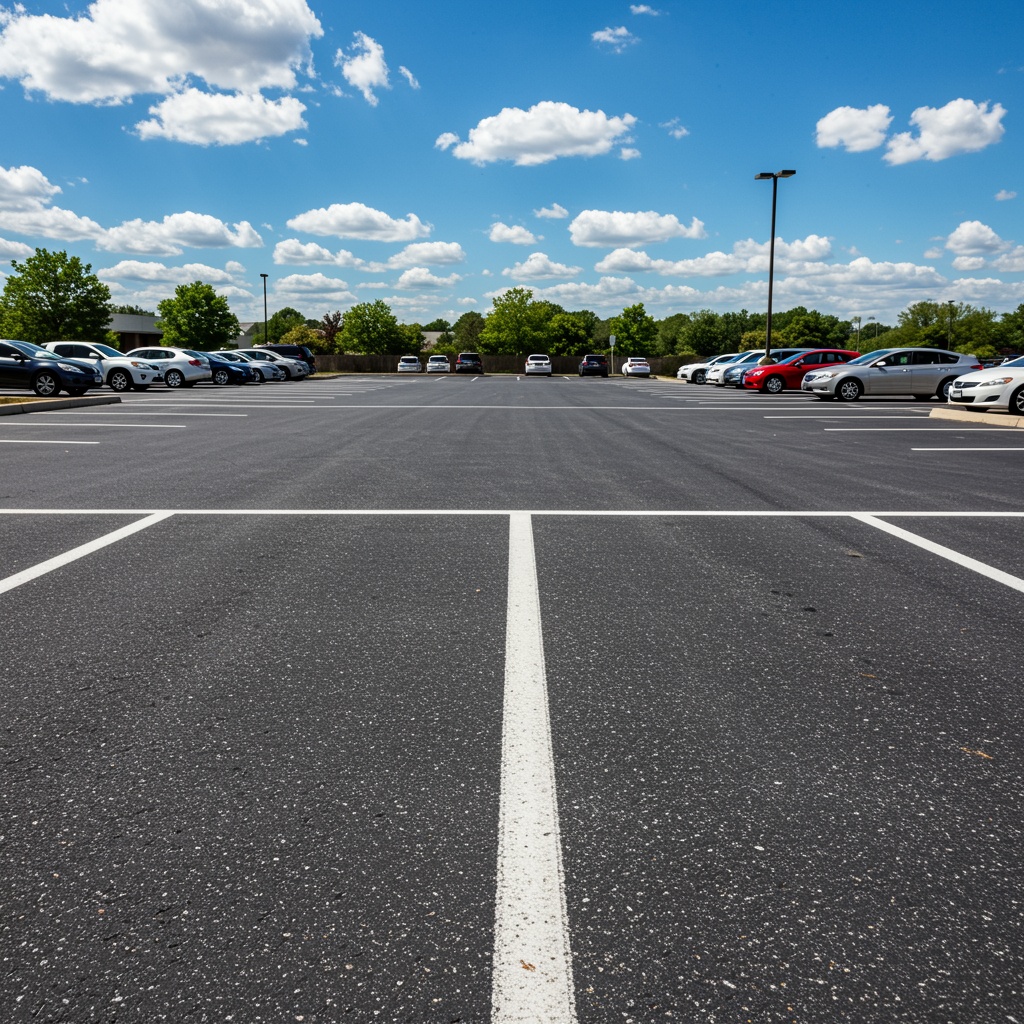
Stall marking, fire lanes, directional arrows, and accessible spaces laid out to code. New layouts, re-stripes over faded lines, and reconfigurations that get you more usable spaces out of the same asphalt.
Nothing dates a property faster than faded striping. A lot with crisp white lines reads as looked-after even when the asphalt underneath is ten years old; the same lot with ghost lines reads as neglected regardless of its condition. Re-striping is among the least expensive work we do and it changes how a site looks more than almost anything else per dollar.
On a re-stripe we normally follow the existing layout, but it is worth asking whether that layout is right. Lots laid out decades ago frequently waste space — aisles wider than they need to be, angles that no longer suit the traffic flow, or stall widths that could yield another row. We will measure and tell you if there is a better arrangement before we start painting the old one back on.
Accessible stall count scales with total spaces, and each one needs an adjacent access aisle, correct signage, and surface slopes within tolerance in all directions. Lots that have been overlaid a few times often drift out of compliance without anyone noticing, because each overlay changes the grade slightly. If yours has been resurfaced more than once, it is worth having the slopes checked rather than assumed.
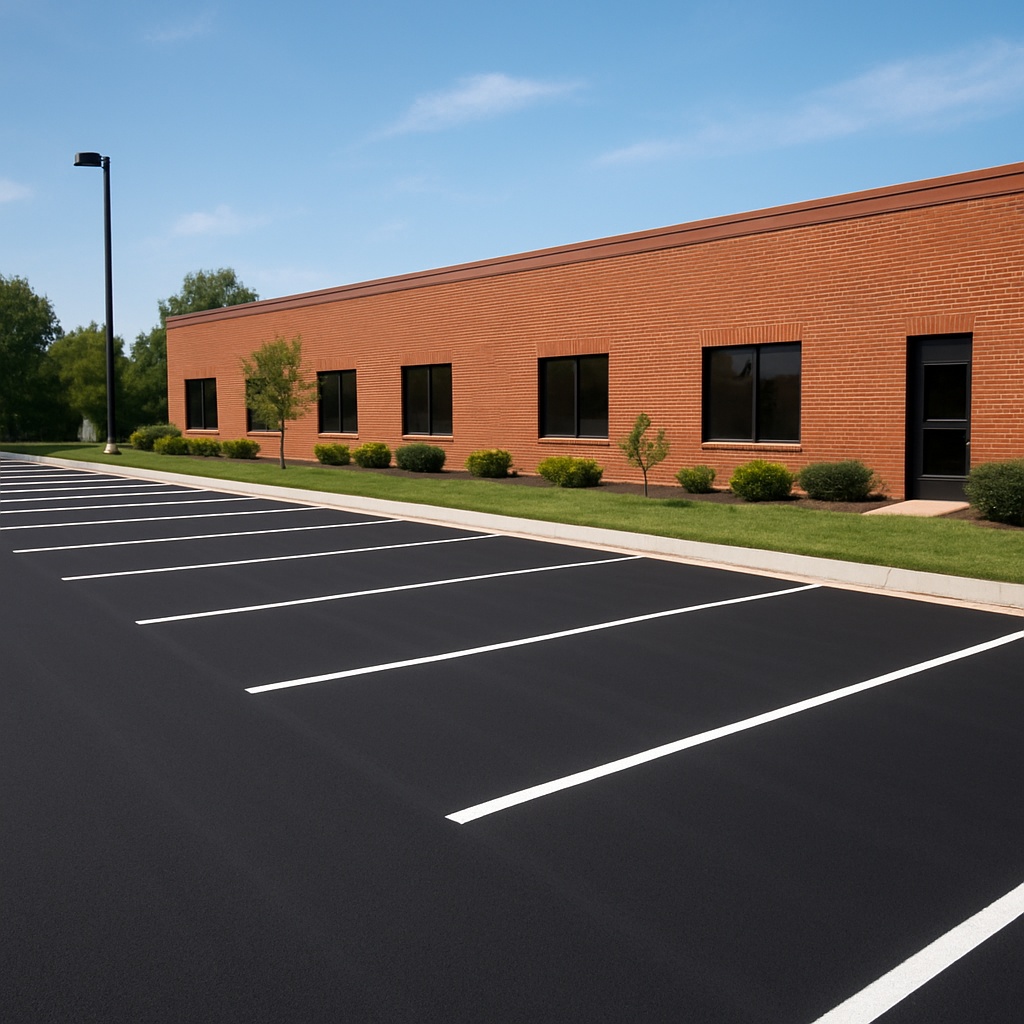
Fresh layout or repaint over existing lines, in traffic-grade paint that survives a plough season.
Correct stall count for lot size, access aisles, hatching, and signage positions.
Marked and lettered to what your local fire marshal requires.
Traffic flow arrows, stop bars, crosswalks, loading zones, and stencilled lettering.
Re-laying out a lot to gain spaces, improve circulation, or add a pickup area.
Fire lane curbs, bollards, and wheel stops repainted at the same visit.
A re-stripe is usually a one-day job and the cheapest thing you can do for how a property looks. Call (215) 997-1258 for a number.
Every one to three years for most commercial lots, depending on traffic and how hard the plough hits them. Lots that are ploughed all winter lose paint fastest, since the blade scrapes directly across the lines. If your stalls are visible but faded, you are about due; if drivers are parking crookedly because they cannot see the lines, you are overdue.
Traffic paint is dry to touch in under an hour in good weather and ready for traffic in about two to four. We normally stripe a section at a time so most of the lot stays usable, and we can work evenings if you would rather it not affect the day at all.
It scales with the total number of spaces in the lot, with a proportion of those required to be van-accessible, and each needs a marked access aisle alongside. Because the exact requirement depends on your total count and how the lot is used, we will work it out against your specific layout rather than quoting a rule of thumb. If your lot has been resurfaced since it was first laid out, it is worth re-checking the slopes as well as the count.
Yes, and that is the normal sequence — sealcoat, let it cure, then stripe. Paint bonds well to fresh sealer and the contrast is at its best. We usually allow at least 24 hours between the two, longer in humid weather.
Often, yes. Older layouts tend to be generous with aisle widths and stall dimensions in ways that current practice does not require. We will measure the lot and show you what a revised layout yields before you commit to anything — sometimes it is a handful of spaces, occasionally it is a whole extra row.
Tell us what you're working with and we'll get back to you within one business day — usually faster. Or skip the form and call (215) 997-1258.