
Full-Surface Milling
Whole lots and roads ground to a set depth ahead of an overlay.
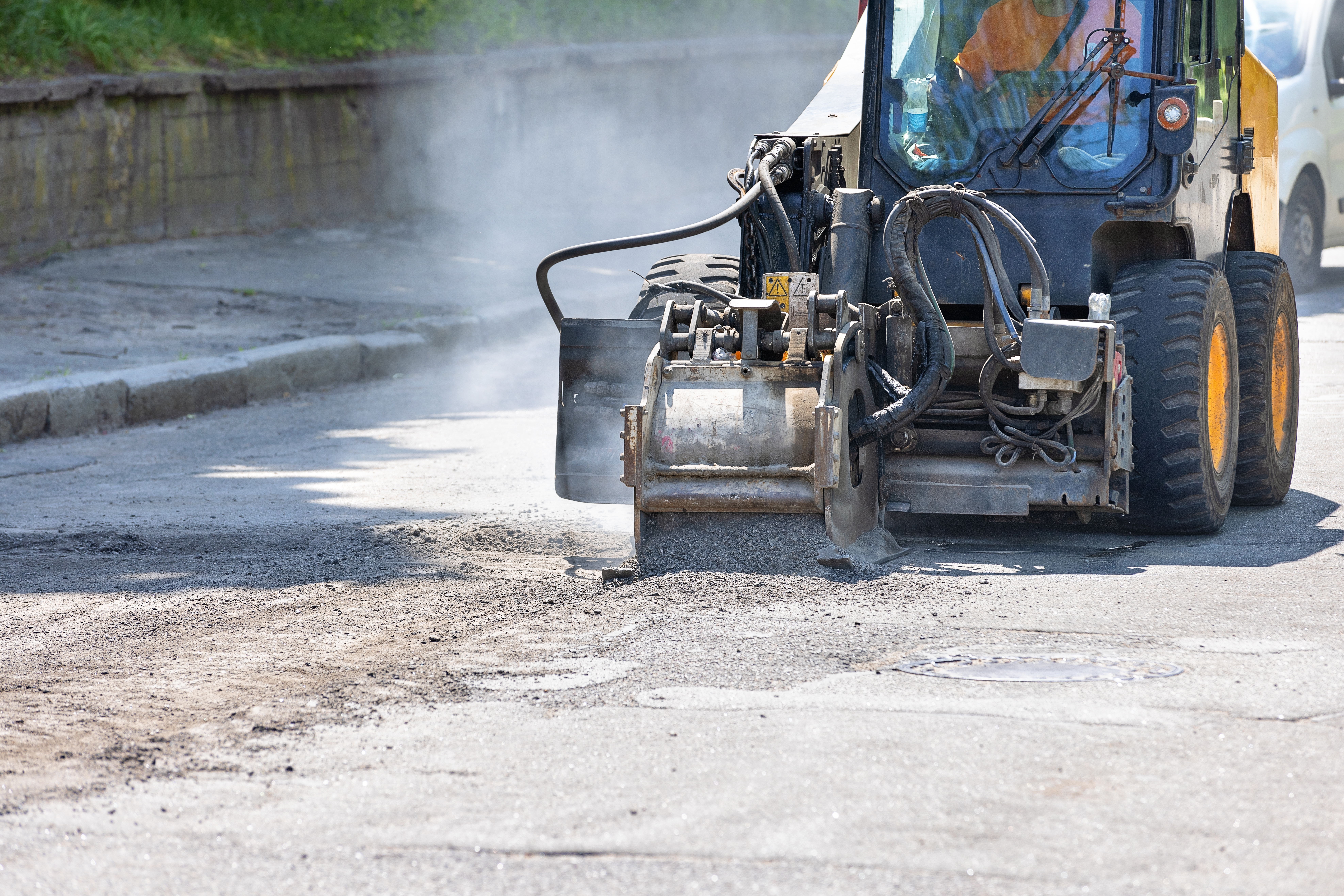
Grinding off the existing surface to a controlled depth so a new one can go back at the original level. The step that keeps resurfaced lots tied in at curbs, thresholds, and drainage inlets instead of stepping up over them.
Milling grinds off the top layer of asphalt to a set depth, leaving a rough, keyed surface for new material to bond to. It exists because you cannot keep adding layers to a lot forever — every overlay raises the surface, and eventually the lot is higher than the curb, the door thresholds are too low, and the drainage inlets sit in a hump instead of a hollow.
On commercial lots, milling is usually not optional. Inlets have to stay at the low point or the lot ponds. Curb reveal has to be preserved or you lose the step. Doorway thresholds have to stay below the interior floor. Milling the equivalent depth off before overlaying keeps all of that where it was.
A mill can take out ruts, high spots, and the wave that develops in a lot after twenty years of truck traffic. Because the machine cuts to a controlled grade rather than following the existing surface, the milled result is flatter than what it removed — which means the new asphalt laid over it is flatter too.
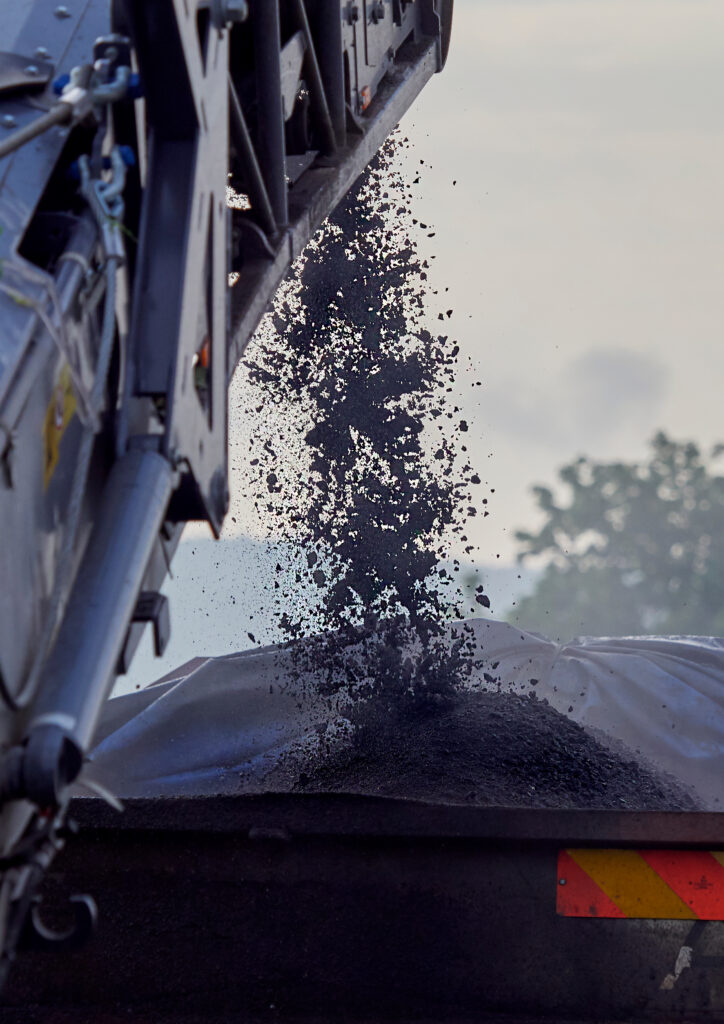
Ground-up asphalt is a genuinely useful material. It makes a good, well-draining surface for farm lanes, equipment yards, overflow parking, and long rural drives where paving is not warranted. If you have somewhere to use it, we can leave and spread it rather than hauling it away, which reduces the disposal cost on your invoice.
Whole lots and roads ground to a set depth ahead of an overlay.
Tapered cuts at curbs, aprons, and tie-ins so new asphalt meets existing surfaces flush.
Cutting around drainage inlets and manholes so the finished grade still drains to them.
Grinding out ruts and high spots so the new surface goes down on a true profile.
Recycled millings placed and compacted for lanes, yards, and rural drives.
Milled surface swept clean before tack and paving, because loose fines stop the bond.
We will look at your levels, inlets, and tie-ins and tell you what depth needs to come off. Call (215) 997-1258.
You can overlay directly if there is somewhere for the extra height to go. On an open driveway with soft edges, usually there is. On a commercial lot with curbs, doorways, and drainage inlets, usually there is not — and overlaying anyway is how lots end up ponding water and losing curb reveal.
Typically the same depth as the new surface going back on, so between an inch and a half and two inches for most lots and drives. Where we are correcting ruts or a bad profile, it may be deeper in places. The depth is set to what the job needs rather than a standard pass.
Yes, temporarily. It is rough, noisy, and hard on the feet, but it carries traffic fine for a few days. We normally mill and pave within a short window so nobody is living with it for long. Leaving a milled surface open through a wet spell is worth avoiding, since water sitting in the grooves does the base no favours.
It is recycled — asphalt is one of the most reused construction materials there is. It either goes back to the plant to be reprocessed into new mix, or stays on site if you have a use for it. Millings make an excellent surface for farm lanes and equipment yards, and using them there saves you the haul-off cost.
Yes, genuinely — it is one of the louder operations in this trade. On occupied commercial sites we plan the timing around that, and on residential jobs we let neighbours know. It is also fast, so the noise is measured in hours rather than days.
Tell us what you're working with and we'll get back to you within one business day — usually faster. Or skip the form and call (215) 997-1258.