
Residential Paving
New driveways and full replacements — excavation, stone base, and asphalt, with the depths written into the quote.
See Residential Paving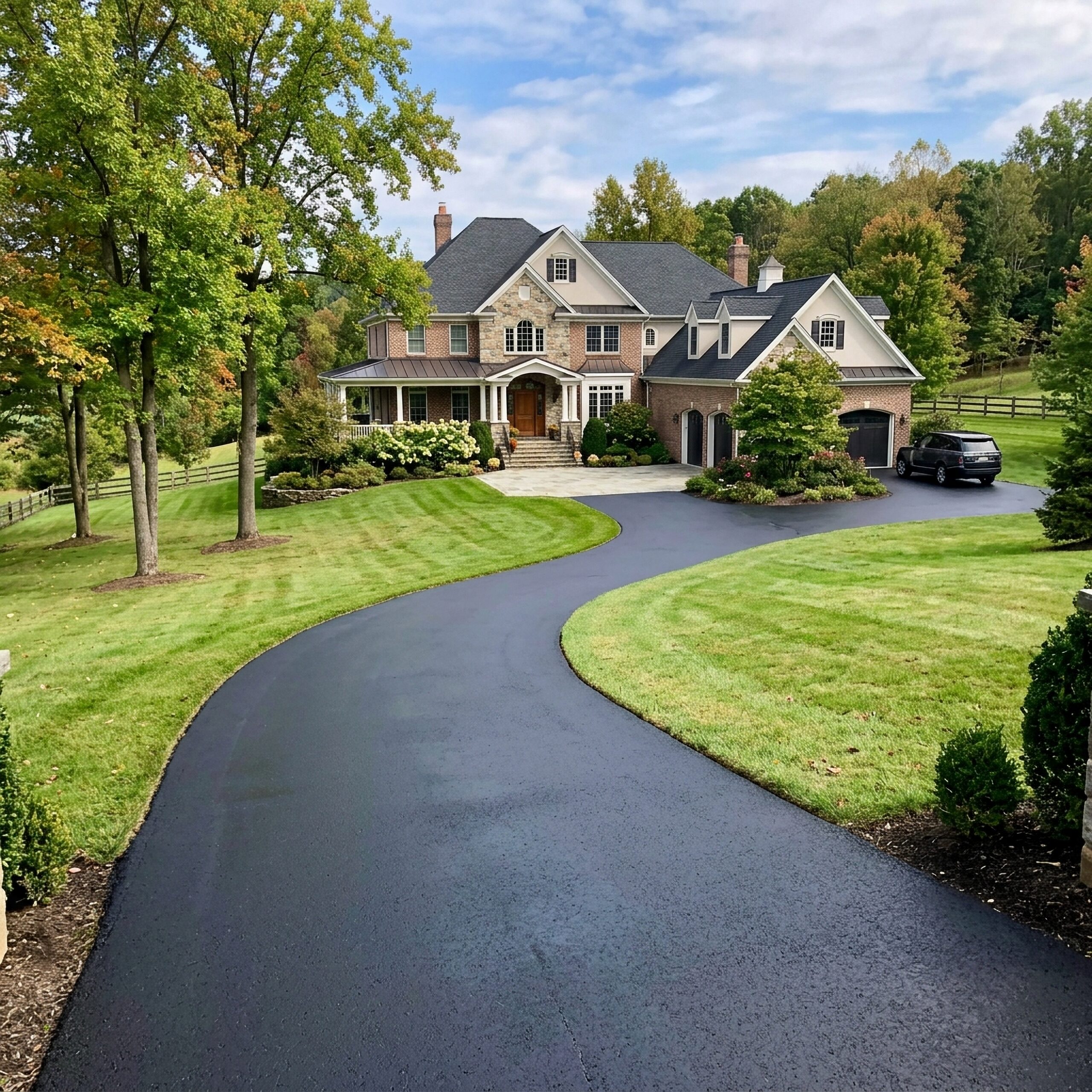
Driveways, parking lots, private roads, and everything that keeps them from failing early. One crew, one owner on site, one written price.
Most people call us knowing something is wrong with their pavement without knowing what it is called. That is fine — describing it is our job, not yours. But if you want to narrow it down before you pick up the phone, here is roughly how we sort the work.
If the surface is failing but the ground underneath is still solid, you are usually looking at a repair or a resurface: we fix or remove the top and leave the base alone. That is the cheaper half of this trade and it is where we send people whenever it will actually hold.
If the base has gone — if the pavement moves underfoot, holds water after every storm, or has alligator cracking spreading across whole sections — then patching the top is money you will spend twice. That is a replacement, and we will say so plainly rather than sell you a resurface that fails in three years.
Then you are in the best position of anyone reading this. Sealcoating and crack filling on a sound driveway is the cheapest thing in this entire list and it is the single thing that most changes how long the surface lasts. Forty freeze-thaw cycles a winter get into every crack you leave open. We would rather seal your driveway six times over twenty years than replace it twice.
Driveways, aprons, walkways and private lanes. The owner walks the property, writes the quote, and is there while it is paved.
New driveways and full replacements — excavation, stone base, and asphalt, with the depths written into the quote.
See Residential PavingPotholes, sunken sections, crumbling edges and drainage problems fixed without replacing what is still sound.
See Driveway RepairCrack filling and sealer on a sound driveway — the cheapest thing on this page and the one that adds the most years.
See SealcoatingCut-and-patch on failed areas, from a single pothole to a section that has broken up over a bad subgrade.
See Asphalt RepairLots, private roads and access drives, phased around your operating hours so you are never fully closed.
Parking lots and private roads built for loaded trucks, with drainage designed before the first load of stone.
See Commercial PavingScheduled sealer and crack filling that keeps a lot off the replacement cycle for as long as possible.
See Commercial SealcoatingFailed bays, drive aisles and dumpster pads repaired in sections, usually overnight or across a weekend.
See Parking Lot RepairLayout, restriping, ADA stalls and signage — done right after sealcoating or on its own.
See Parking Lot StripingThe part nobody sees, which is exactly why it is the easiest place for a contractor to save money at your expense.
A new wearing course over a base that is still good — a fraction of the cost of a full replacement.
See Asphalt ResurfacingGrinding off the old surface to hold existing grades and keep door thresholds and curb reveals where they are.
See Asphalt MillingGrading, drainage, stone and prep — the groundwork that decides whether any of the above lasts.
See Site WorkSquare footage, excavation depth, compacted stone depth, asphalt thickness and what happens at the edges — so you can compare our quote against anyone else's on something real.
The person who walked your property and wrote the quote is there while the work happens. No sales layer between you and the crew.
If a repair will do instead of a replacement, the quote says repair. That costs us the bigger sale and it is why this business is still here after forty years.
Base depth, drainage and mix chosen for Pennsylvania freeze-thaw — not for the cheapest route to a surface that looks finished on day one.
Not sure which of these you need? That is the normal way to start. Send a photo or call (215) 997-1258 and we will tell you what we would do.
The short version: if the ground underneath is sound, you repair; if the base has failed, you replace. The tell is whether the pavement flexes or holds water. Alligator cracking — a web of small cracks over a whole area rather than single lines — usually means the base is gone. You do not have to diagnose it yourself, though. We look at it for free and tell you which one it is, and we say repair more often than replace.
Yes. Paving, repair, sealcoating, striping, milling and site work are all our own crews and our own equipment. Nothing on this page gets handed to a subcontractor you have never met, which is the single most useful question to ask any contractor you are getting quotes from.
It depends on square footage, access, how much has to come out, and what the drainage needs — which is why nobody in this trade can honestly quote you over the phone without seeing it. What we can tell you is that the estimate is free, written, and itemised, and that there is no charge for us coming out to look even if you go with someone else.
Bucks and Montgomery County, out of Hilltown. That is deliberate — staying close is what lets the owner be on every job and what makes a callback a ten-minute drive rather than a decision. If you are on the edge of that range, call and ask.
Paving runs roughly April through October here; asphalt needs warm ground to compact properly. Sealcoating wants a stretch of dry weather above about 50°F. Repairs we do nearly year-round. The busy stretch is late spring through summer, so if you want work done then it is worth getting on the schedule early.
Tell us what you're working with and we'll get back to you within one business day — usually faster. Or skip the form and call (215) 997-1258.