
Crack Filling
Routed and filled with hot rubberised sealant before any sealer.
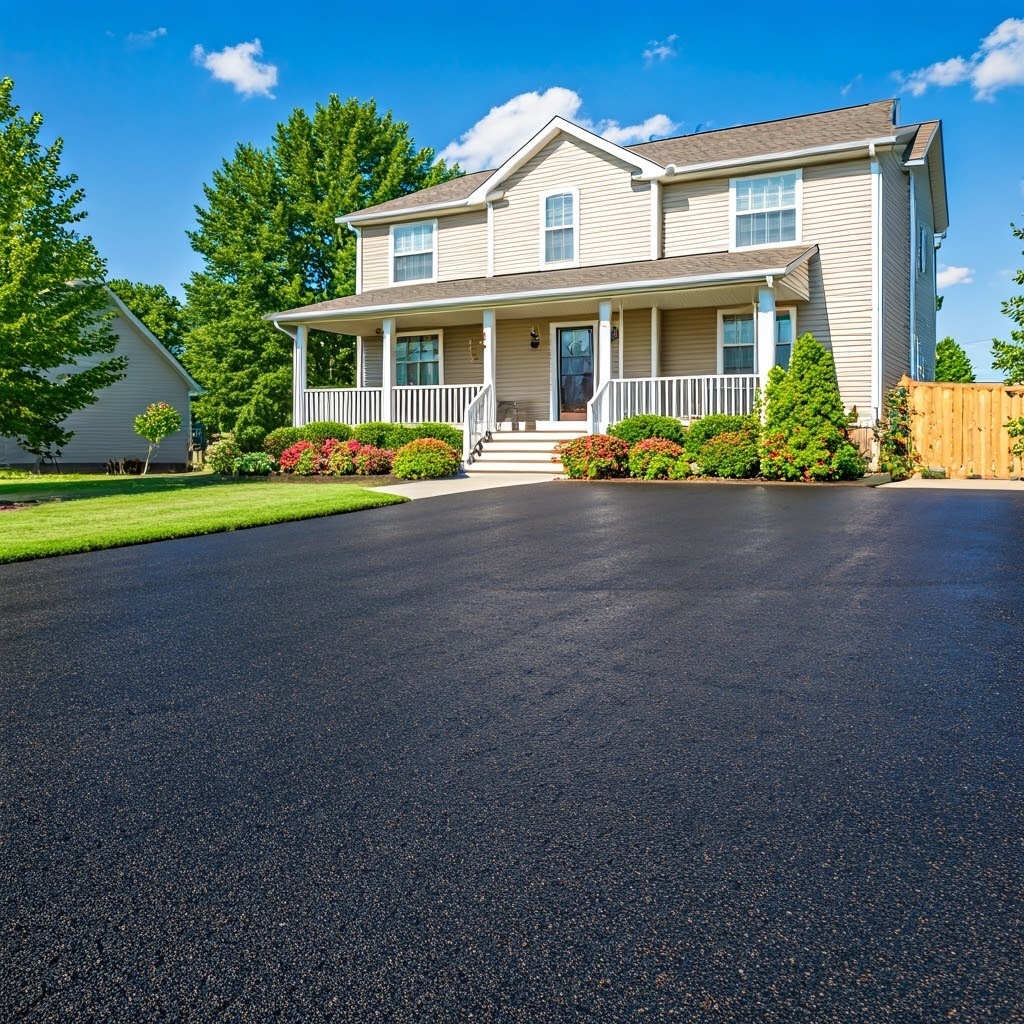
Crack filling and sealcoating done properly — surface prepared, oil spots primed, sealer applied at specification rather than thinned to cover more ground. Every two to three years is what actually extends a driveway.
Sealcoating is simple work that is easy to do badly, and the difference does not show for a year. Three things separate a seal that lasts from one that peels.
Sealer bonds to clean asphalt only. The surface has to be swept and blown out, vegetation cleared from cracks, and oil-contaminated areas primed. Sealer over a dirty surface looks perfect for three months and then lifts in sheets.
Sealer arrives concentrated and is diluted on site. Every gallon of water past specification makes it cover more area and fail sooner. This is the easiest corner in the trade to cut and completely invisible on the day.
Sealer protects the surface from sun and fuel. Crack filling protects the structure by keeping water out of the base. They are different jobs and only one of them meaningfully extends the driveway’s life. If you buy one thing, buy the crack filling.
Warrington gets a lot of door-to-door sealcoating in summer. Ask what preparation is included, ask whether crack filling is in the price, and make sure you can find them again next spring.
Routed and filled with hot rubberised sealant before any sealer.
Edges cut in by hand rather than sprayed over your lawn.
Contaminated areas treated so the sealer bonds.
Potholes and failures dealt with before sealing, since sealer will not fix them.
Phased sealing so parking is never entirely lost.
Oxidised surfaces get two coats rather than one thin one.
If it has been three years or the surface has gone grey and porous, it is time. Call (215) 997-1258.
Every two to three years. Annually wastes money and builds a film that eventually cracks and peels on its own. Five years or more and the asphalt oxidises between treatments, which is what you were paying to prevent.
Usually not. The recurring pattern is sealer thinned well past specification, no surface preparation, no crack filling, and nobody to call when it fails. If the price seems remarkable, the dilution is generally where it came from. Ask specifically what preparation and crack filling are included.
No. Sealer is a coating a fraction of a millimetre thick and cannot bridge a crack. Crack filling is a separate step with hot rubberised sealant, done before sealing.
24 hours for walking, 24 to 48 for vehicles, longer in cool or humid weather. Do not turn your steering wheel while stopped for the first fortnight — it scuffs fresh sealer easily.
Late spring through early autumn. Sealer needs surface temperature above roughly 50°F and rising, dry weather for 24 hours after, and enough daylight to cure. We will reschedule rather than apply into a forecast we do not trust.
Tell us what you're working with and we'll get back to you within one business day — usually faster. Or skip the form and call (215) 997-1258.