
Driveway Sealing
Residential drives cleaned, cracks filled, and sealed edge to edge with a cut-in border rather than a sprayed overspray line.
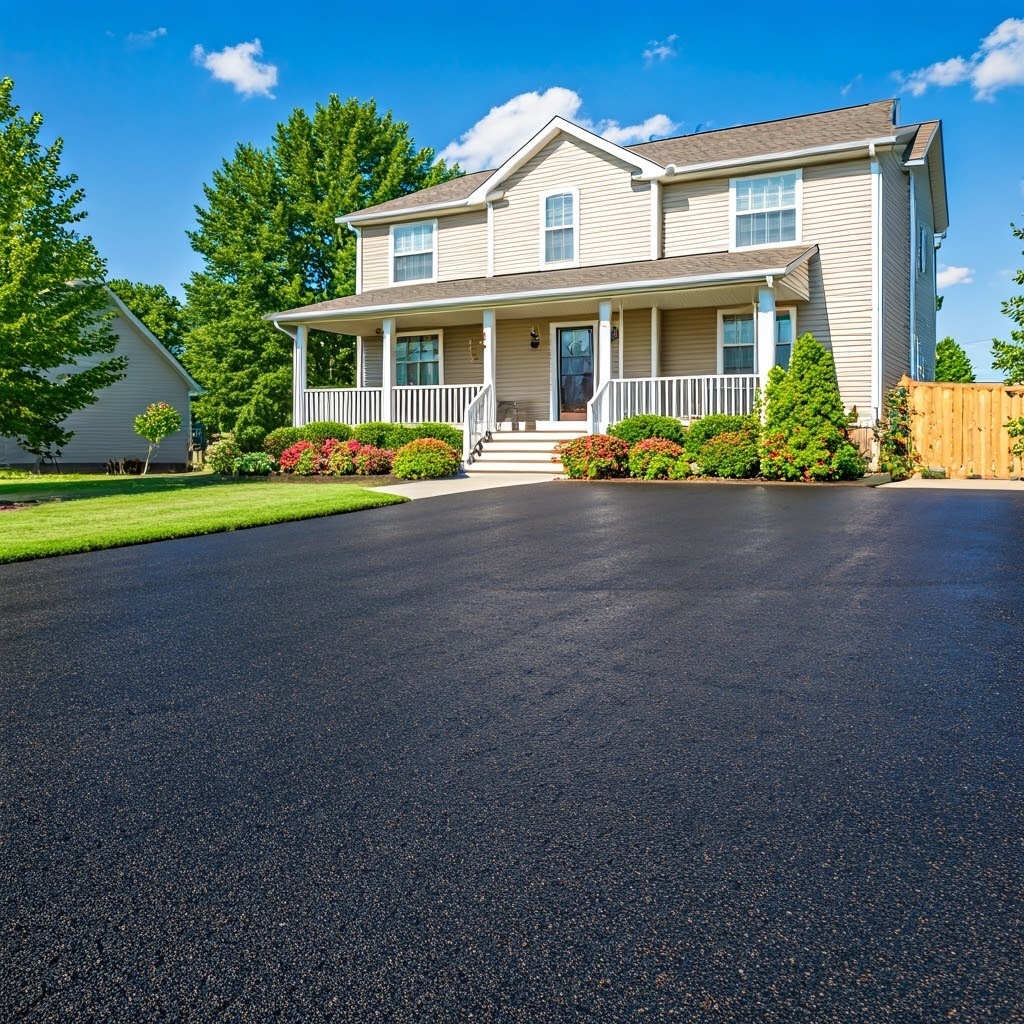
Driveway and blacktop sealing on a schedule that actually extends the life of the asphalt rather than just darkening it for a season. Commercial-grade sealer, applied at the right temperature, over a surface that has been prepared properly.
Sealcoating is a wear layer. It protects the asphalt underneath from the three things that age it: ultraviolet light, which breaks down the binder holding the stone together; water, which gets into the surface and freezes; and petroleum — oil and fuel drips — which dissolves that binder directly.
What it does not do is add strength. Sealer is a coating measured in fractions of a millimetre. It will not bridge a structural crack, it will not stop a failing base, and it will not fix a pothole. Anyone selling sealcoating as a repair is selling you a cosmetic treatment with a repair’s price tag.
Sealer bonds to clean asphalt and nothing else. That means the surface has to be swept and blown clear, oil spots have to be treated with a primer or they will bleed through and the sealer will lift, and vegetation in the cracks has to come out. A sealcoat applied over a dirty surface will peel within a year, and it will look fine for the first three months — which is long enough for the contractor to be gone.
Cracks get routed and filled with hot rubberised sealant before any sealer goes down. This is the part of the job that actually extends the driveway’s life, because it is what stops water reaching the base. If you only ever buy one thing for your driveway, buy this.
Every two to three years for most residential drives. More often than that is money wasted and can build up a coating thick enough to crack on its own; much less often and the asphalt oxidises between treatments. A brand-new driveway should be left alone for its first year — fresh asphalt needs to cure and release its oils before it will take sealer properly.
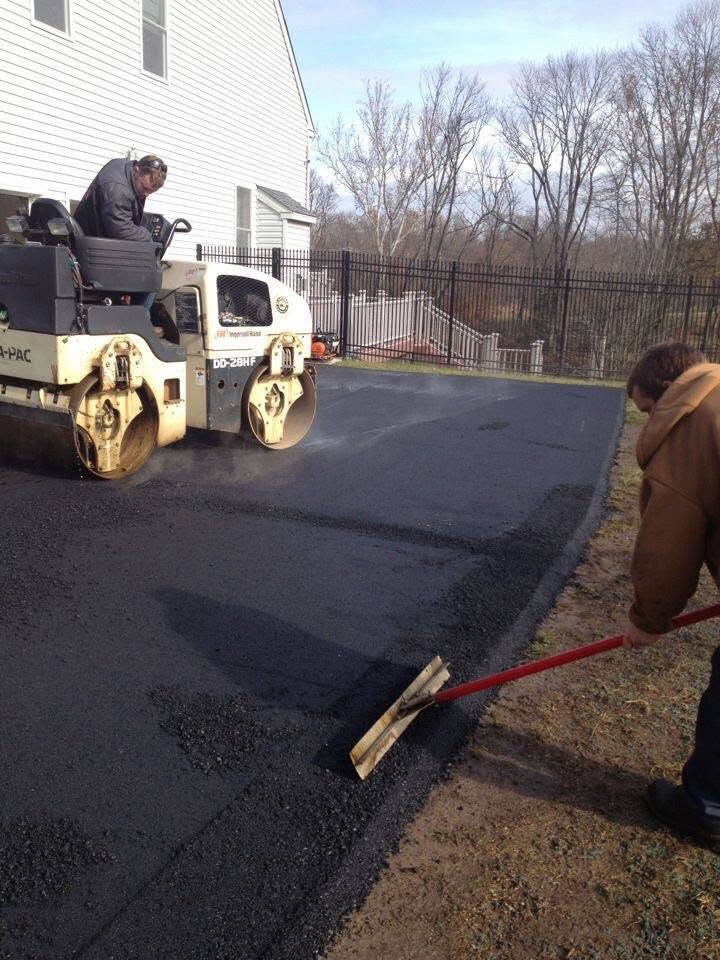
Residential drives cleaned, cracks filled, and sealed edge to edge with a cut-in border rather than a sprayed overspray line.
Routed and filled with hot rubberised sealant before sealing. The step that does the actual work.
Petroleum-contaminated areas treated so sealer bonds instead of lifting off in patches next spring.
Phased sealing on lots that cannot close, scheduled around your operating hours.
Community roads sealed section by section so residents keep access throughout.
Sealing and re-striping as one visit, in the right order and with proper cure time between.
Sealer needs surface temperature above roughly 50°F and rising, no rain within 24 hours, and enough daylight left to cure. We reschedule rather than apply into a forecast we do not like.
Sealer is supplied concentrated and diluted on site. Adding more water than the specification allows makes it go further and makes it fail early. It is the easiest corner to cut and impossible to see on day one.
High-traffic lots and badly oxidised drives get two. A single coat on a surface that needed two looks identical for a year and then does not.
A driveway paved this year should not be sealed this year. We will tell you to wait, and come back when it is ready.
If it has been three years or more, or the surface has gone grey and porous, it is time. Call (215) 997-1258 for a number.
Every two to three years for most residential driveways in this climate. Sealing annually is a waste of money and can build a film thick enough to crack and peel on its own. Leaving it five or more years means the asphalt oxidises and ravels between treatments, and you lose the protection you were paying for.
Wait at least a full year, and through a summer. New asphalt needs to cure and release its surface oils; sealer applied too early will not bond and can trap those oils, leaving a soft, tacky surface. A brand new drive does not need the protection yet anyway.
Keep off it for 24 hours for foot traffic and 24 to 48 hours for vehicles, longer in humid or cool weather. Avoid turning your wheels while stationary for the first week or two — power steering on a fresh seal will scuff it.
No. Sealer is a thin coating and will not bridge or repair a crack of any real width. Cracks are dealt with separately, before sealing, with hot rubberised crack filler. Anyone quoting sealcoating as a fix for a cracked driveway is describing a cosmetic job.
On a sound driveway, yes — clearly. It is a few hundred dollars every couple of years against a driveway replacement that runs into five figures, and it reliably adds years. On a driveway whose base has already failed, no: you would be putting a coat of paint on something that needs rebuilding, and we will tell you so.
Late spring through early autumn. The sealer needs warmth and dry weather to cure properly, and it needs the surface temperature to stay up for several hours after application. We generally seal between May and September in this area, and will not push into a cold snap at the edges of the season.
Tell us what you're working with and we'll get back to you within one business day — usually faster. Or skip the form and call (215) 997-1258.