
Site Excavation
Stripping, cut and fill, and bulk excavation for driveways, lots, additions, and outbuildings.
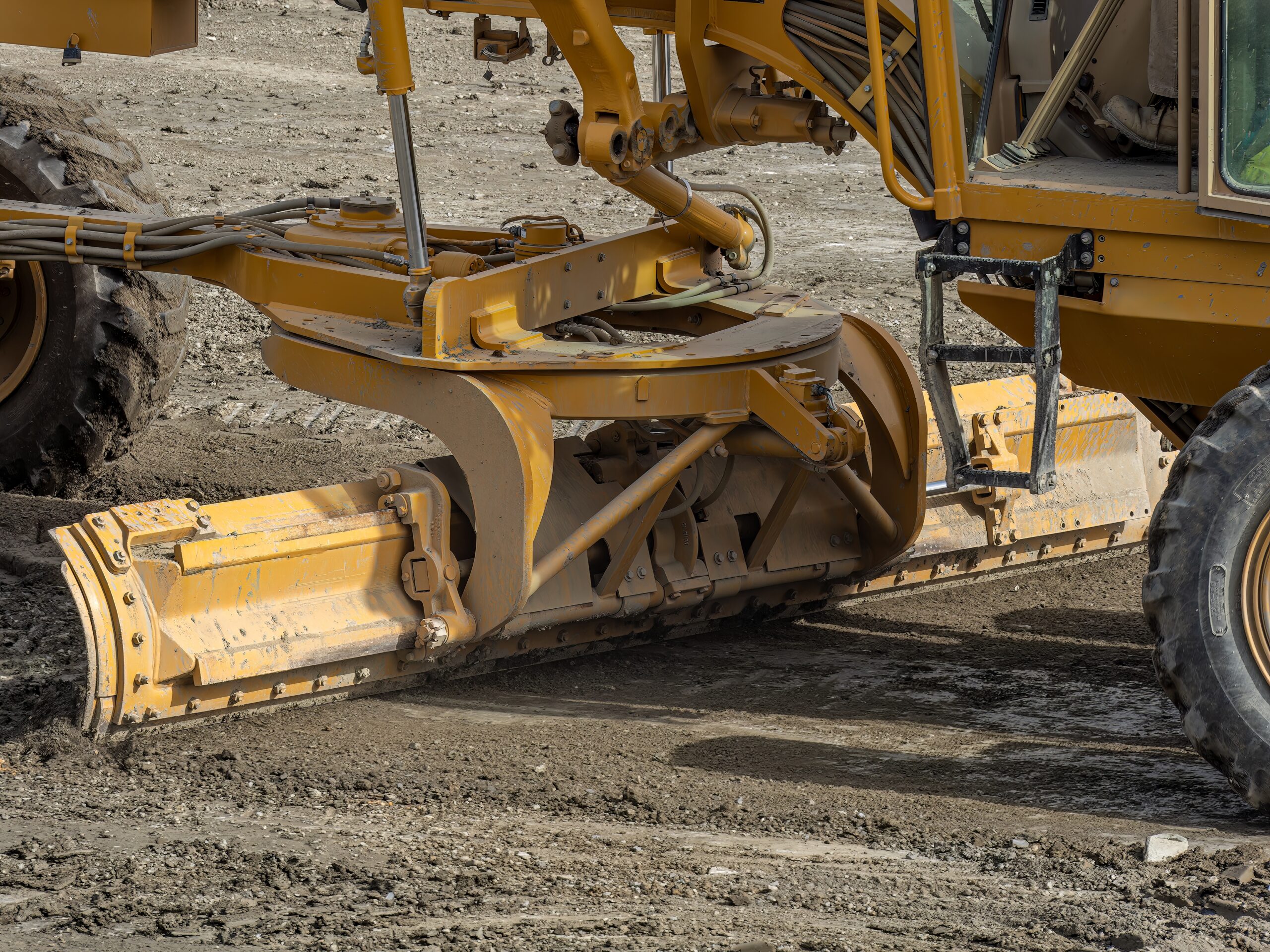
Excavation, land grading, drainage, and base preparation — the work that happens before anything gets paved, and the work that decides whether what gets paved lasts. Residential lots, commercial sites, and everything that needs moving first.
We got into excavation because we kept being asked to pave over ground that could not carry it. A driveway laid on a subgrade that was never properly prepared will fail regardless of how good the asphalt was, and the only honest way to quote that job is to price the groundwork too.
So we do the whole sequence: strip and excavate, establish grades, deal with the water, build and compact base, and then pave. One contractor, one responsibility, and nobody standing on your property explaining that the problem is the other trade’s fault.
Land grading looks like moving dirt around and is really about deciding where water goes for the next thirty years. Pitch away from foundations, positive fall to somewhere it can safely leave, and no low spots where it can pool and sit. Get that wrong and you get wet basements, standing water in the yard, and pavement that fails from underneath.
Soil conditions here vary a great deal over short distances. The clay-heavy soils across the upper townships hold water and heave; areas closer to the river are sandier and drain freely but can be unstable in different ways; and shallow bedrock turns up often enough that it is worth allowing for. That variability is why we look at the ground rather than pricing from a standard build-up.
We handle site preparation, grading, drainage, base, and paving. We are not engineers — where a job needs a stormwater design, a survey, or a soils report for a permit, that comes from a licensed professional and we build to it. We will tell you early if your job is one of those, because finding out late is expensive.
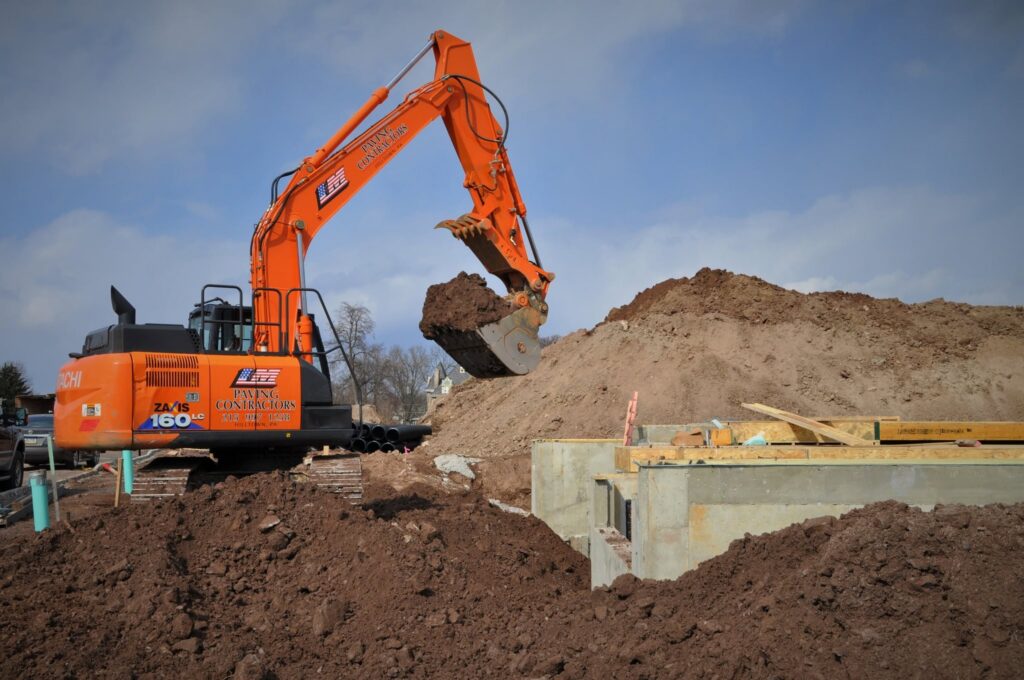
Stripping, cut and fill, and bulk excavation for driveways, lots, additions, and outbuildings.
Establishing finished grades with positive fall away from structures and no standing water.
Swales, french drains, trench drains, downspout runs, and inlets — routing water somewhere it can safely go.
Stone base placed and compacted in lifts, sized to the soil and the load rather than to a standard.
Old asphalt, concrete, and stone taken out and hauled away, with the material recycled where possible.
New stone drives, farm lanes, and equipment yards graded, crowned, and compacted to shed water.
PA One Call before any excavation, every time, without exception. It is free, it is the law, and hitting a gas line is not a risk worth taking to save three days.
We walk the site and work out the existing drainage before we change anything, because moving dirt without knowing that is how you flood a neighbour.
Earth disturbance thresholds, stormwater rules, and driveway access permits vary between townships here. We will tell you what your job triggers.
Excavated material either gets used on site to make grade or hauled off. Either way it is priced up front, not discovered as an extra.
We will walk it, tell you what the ground actually needs, and quote the groundwork and the paving together. Call (215) 997-1258.
It depends on how much earth you are disturbing and what you are changing. Most townships in Bucks County have a threshold above which an earth disturbance or grading permit is required, and anything that alters stormwater runoff or creates a new access onto a road generally needs approval regardless of size. A new access onto a state road needs a PennDOT highway occupancy permit.
We will tell you what we think your job triggers, but the township is the authority and it is worth a call to them early.
Usually. The fix depends on the cause — sometimes it is a regrade to create fall, sometimes a swale to intercept and redirect, sometimes a french drain where there is nowhere to grade to. What we cannot do is make water run uphill, so occasionally the honest answer is that the only real solution is a drain to a point of discharge, which is a bigger job than people hope.
For a typical residential driveway on reasonable soil, 6 to 8 inches of compacted modified stone. On clay, on soft ground, or where the drive takes heavy vehicles, more — sometimes considerably more, occasionally with a geotextile between subgrade and stone to stop the two mixing. The number depends on what is under it, which is why we look rather than quote a standard.
Yes, and that is the point of doing both. When one contractor is responsible for the ground and the surface, there is nobody to blame when something settles. It also means the base gets built for the pavement that is going on it rather than to a generic spec.
Anywhere from a day for a small regrade to several weeks for a full commercial site. Weather matters more here than on most work — you cannot compact saturated ground, and a wet week genuinely stops excavation. We build that into the schedule rather than promising dates we would need luck to hit.
Tell us what you're working with and we'll get back to you within one business day — usually faster. Or skip the form and call (215) 997-1258.